Developing story · Updated November 17, 2026
By the Founders, Department of Technology | San Diego, California | November 17, 2026
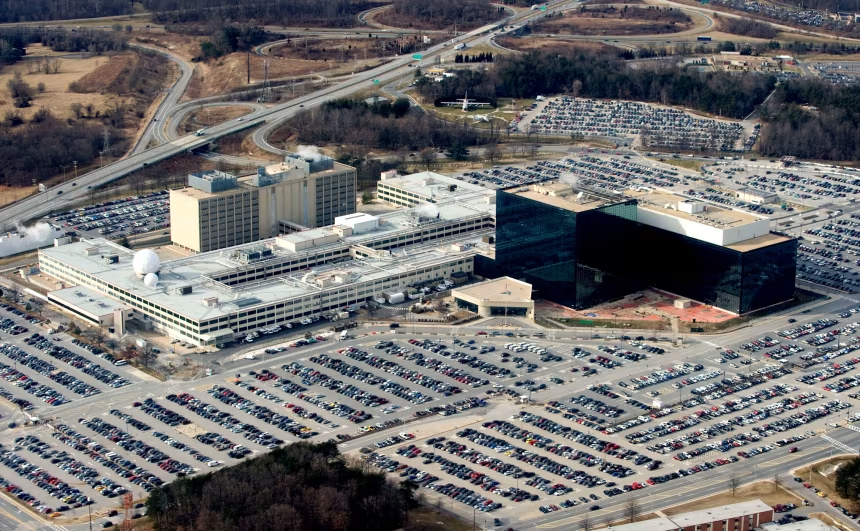
On Tuesday, November 17, 2026, the network the National Security Agency uses for its own classified internal communications went down. By Tuesday night, the agency had closed its Fort Meade campus to most employees. The NSA calls it a maintenance problem, the Director of National Intelligence points to a software patch, and sources say there is no sign of a cyberattack. Officials also say the country’s ability to get urgent intelligence to the president is not affected.
At a glance
- What happened: NSANet, the NSA’s internal classified network, went down Tuesday. By night, the Fort Meade campus was closed to most employees.
- Stated cause: The NSA says routine maintenance. The Director of National Intelligence says a patch for software flaws.
- Cyberattack? Officials and sources say there is no evidence of one so far.
- Impact: Officials say urgent intelligence for the president and Five Eyes sharing are not affected.
- Status: Restoration was ongoing but not complete at last report.
This is a national security story, but it is also a technology story, and it follows several others from the past week. Below, we summarize what has been reported, explain in plain terms why a patch can break the very systems it is meant to protect, set out where we think a Department of Technology fits and where it does not, and list questions we believe deserve public answers. The story is still developing. We rely on published reports and say where accounts differ.
What has been reported so far
Here is what the reporting shows as of Tuesday night.
- The outage. CNN reported, citing six people familiar with the matter, that NSANet is down. NSANet is the network that lets NSA employees share classified information internally.
- The staffing changes. A voicemail line for NSA employees first announced “code yellow,” the middle level of a three-level system, and told non-emergency staff to arrive in a staggered way. Later in the day the line went back to “code green,” and then to “code orange,” which closed the campus to most employees until further notice, according to CNN. It is not clear what prompted the reversal. The New York Times first reported the code yellow message.
- The NSA’s explanation. In a statement, the agency said it had experienced “temporary degradation during scheduled routine maintenance,” that some internal systems were affected, and that mission-critical capabilities remain fully operational. It added that its infrastructure has multiple layers of redundancy.
- The Director of National Intelligence’s explanation. Jay Clayton said on Fox Business that the outage came from applying a software patch for serious vulnerabilities found last month, and that some systems did not come back up as expected after patching. He said there is no sign that any of the recent tech outages, including this one, were caused by a cyberattack.
- Sharing with allies. According to CNN, a source from one of the Five Eyes countries and a former U.S. intelligence official said intelligence sharing among the U.S., U.K., Canada, Australia and New Zealand has not been affected.
- The president. A current and a former U.S. official told CNN that an NSANet outage would not stop the agency from getting urgent intelligence to President Trump while he travels in Asia. Both described backup networks for secure communication.
- Restoration. A source told CNN that restoration was ongoing but not complete. The Wall Street Journal, as summarized by HeadTopics, cited one person who said the outage stemmed from a patching update and would be temporary.
The PHP flaws Clayton referred to are a separate story that has been building for weeks. PHP is a programming language that CNN says powers about 70 percent of the world’s websites. AI tools helped researchers exploit the flaws, which set off a scramble among governments and companies to patch. The NSA itself urged organizations to apply the fixes.
The agency was doing what it told everyone else to do, and the patching still caused trouble.
What we do not know
The public does not yet know which systems failed to come back, how many NSA employees or missions were affected, or how long full restoration will take. We also do not know why the NSA reversed course on staffing within hours.
There is also a tension in the accounts. The NSA described “scheduled routine maintenance,” and Clayton described a patch. But Al-Monitor quoted a person familiar with the outage who said NSANet had been down from early Tuesday through the afternoon after several interruptions over the past month, and Gizmodo relayed a New York Times report that the network had been unstable for weeks. These accounts are not necessarily in conflict, since a repeated patching problem could be both scheduled and ongoing. But they suggest that Tuesday may not have been the first sign of trouble, and we do not claim to know.
We also cannot independently confirm that there was no attack. Officials and sources say there is no evidence of one, and we take that at face value, with the usual caution that early statements can change as investigations continue. Credit is due to officials for addressing the question early, because it is the first one the public asks.
Why a patch can break things
A software patch is a repair. Most of the time it works as intended. But a patch changes a live system, and a large network is a web of equipment, settings and software that depend on each other. A change that is safe in a lab can behave differently in the real network, and a system that restarts after patching does not always come back the way it was.
This is our plain-language reading, and it matches what Clayton described. It also explains the tradeoff officials faced. Waiting to patch known vulnerabilities leaves systems exposed. Patching quickly across a huge network risks outages. Neither choice is free, which is why the process around the patch matters as much as the patch.
The NSA’s problem is also not new. In 2000, a technical failure took the agency’s computers down for nearly three days and interrupted the processing of intelligence at Fort Meade, according to CNN. That tells us the agency has handled failures like this before. It also tells us that even the most capable technical organizations are not immune.
A bad week for everyday technology
Tuesday’s outage is the latest in a run of widely reported failures. On Friday, November 13, the FAA grounded flights nationwide, which we covered in The November 13 Ground Stop. A widespread Microsoft outage followed. On Monday, a software bug in Chase’s equipment slowed transactions across several banks. And on Tuesday, implicator.ai reported that Apple’s status page listed several services as down, with Apple citing an internal update.
There is no indication that these incidents are connected to one another, and we are not claiming they are. What they share is a pattern: changes and updates, whether a router upgrade, a software bug or a security patch, reaching systems that millions of people, or in this case the nation’s intelligence agency, rely on. A bug can sit unnoticed for months, and an update can fail on an otherwise ordinary day. Testing, monitoring, rollback plans and clear ownership are meant to catch exactly this.
Machine Intelligence adds pressure
One detail in this story deserves its own mention. The PHP flaws were exploited with the help of AI tools, which means the time between finding a weakness and being able to use it is shrinking. As Machine Intelligence (MI, often called AI) speeds up the discovery of flaws, organizations will be pushed to patch faster. That raises the stakes for how carefully patches are tested and rolled out. We expect this tension to grow, not shrink, which is why we think it belongs in the public conversation now.
Where a Department of Technology fits, and where it does not
A Department of Technology would not run the NSA, and it would not have access to the NSA’s classified networks. The NSA answers to its own chain of command and to congressional intelligence oversight, and we are not proposing to replace that. We also cannot say that our proposal would have prevented Tuesday’s outage, since the cause has so far been described only briefly and in general terms.
Our narrower claim is the same one we made after the FAA and Chase outages: when systems that matter to the public fail, leaders who understand networks and answer to voters are better placed to demand a clear account afterward. We make that case in Back to Basics. Three parts of our proposal bear on this kind of event.
- Change management. Our framework already calls for impact assessments of major technology initiatives. We would add, as a suggestion that goes beyond the written framework, staged rollouts and tested rollback plans for critical patches, so that a bad patch affects a small part of a network before it affects all of it.
- Network expertise at the top. A leader with hands-on enterprise network experience can judge whether a patching plan is sound and how long recovery should take. That is much harder for someone who has never run a production network.
- Public reporting at the right level. Much of what happened inside the NSA cannot and should not be made public. But a public summary of what failed, why, and what will change, with classified details removed and full details given to cleared oversight members, is a reasonable standard. That is the thinking behind our work on continuity of government, because intelligence communications are infrastructure too.
For more on how we think about a technology leader’s responsibilities, see A Technology Leader’s First Year. For the basics of our proposal, read What Is a Department of Technology?
Five questions for officials and lawmakers
- What failed, and why did some systems not return after patching? Will the NSA and the Office of the Director of National Intelligence give a public, unclassified explanation, and give cleared oversight committees the full account?
- Was this the first problem, or one of several? Reports describe weeks of instability. Were earlier interruptions connected to the patching effort, and were they reported up the chain?
- How are critical patches tested before they reach live systems? Do agencies use staged rollouts and rehearsed rollback plans, and how quickly can a failed patch be reversed? That is our suggestion and goes beyond any rule we know of.
- How should the government balance speed and safety as AI speeds up exploits? What guidance will agencies follow when a flaw is serious and a fast patch carries its own risk?
- How well do the backup systems hold up when the main network is down? Officials say redundancies kept urgent communications working, and a former NSA official said analysis and reporting could still suffer. Has the agency tested how much work slows, and for how long its backups can carry the load?
The bottom line
Officials say the NSA’s most important work continues, that allies are still receiving intelligence, and that there is no evidence of an attack. That matters, and we hope the restoration is quick. But the larger lesson, as with the FAA ground stop and the Chase outage, is that even the best-resourced organizations can be tripped up by the process of changing their own systems, and that the public learns about it through short statements and anonymous sources. Clear reporting afterward is how confidence is rebuilt.
We will update this post as more is reported.
Next in this series: Six Outages in Six Days: Is It a Pattern? The Question the Public Should Ask looks at all six failures together and asks whether they share a cause.
Our coverage of this week’s outages
New to our proposal?
Learn what a Department of Technology is, and how elected technology leaders would answer to voters when systems fail.
Read the basics
Leave a Reply